Landara Alternative for Shopify: When Channel Bay Fits Better
Compare Channel Bay and Landara for Shopify: how each values stock, handles landed cost and purchase orders, Amazon, accounting, and what each costs.
On this page
- What is Landara?
- Which unit cost goes into your margin?
- How does each get from a supplier invoice to a cost?
- What about purchase orders, receiving and Stocky?
- What happens at month-end and in your books?
- How do channels, locations and forecasting compare?
- What does each cost?
- How do Landara and Channel Bay compare?
- Which one fits you?
- About Channel Bay
Key Takeaways
- Landara is a Shopify app for the cost side only: first in, first out costing at landed cost, plus purchase orders and cost of goods sold journals to Xero or QuickBooks Online. Its pages say it does not forecast.
- Stay with Landara if you sell on Shopify only and your bookkeeper wants a monthly journal, or you want every layer costed at landed cost without an extra step. Channel Bay posts no journals.
- Choose Channel Bay if you also sell on Amazon, or want purchase orders, stocktakes, transfers and a forecast in the same system as cost tracking. Landara's FAQ says it is not a good fit when the same stock sells on Amazon.
- Landara prices by orders costed a month, from a free plan up to $179. Channel Bay prices by plan, with unlimited orders on every plan, and cost tracking is on Pro at $60 a month.
- Landara is new, with seven reviews on the day we read it, all five-star and written after 29 minutes to about 22 hours of use. Whichever you pick, check its number against one delivery you have already costed by hand.
Channel Bay is the better Landara alternative if you also sell on Amazon, or want purchase orders, stocktakes, transfers and a forecast in the same system as cost tracking. Landara is the better fit if you sell on Shopify only and the problem is knowing what each unit really cost. Its pages say it costs every layer of stock at landed cost and posts a cost of goods sold journal to Xero or QuickBooks Online each month. Channel Bay does not post journals, and its layers use the unit cost entered at receiving, unless you enter the landed cost there yourself.
Channel Bay is our app, so weigh this guide with that in mind. Everything about Landara below comes from its Shopify App Store listing and reviews, and from its site, FAQ, pricing and help pages, read on 20 November 2026.
Landara and Channel Bay both put a real cost on every unit, but they do different jobs. Landara is a cost ledger for Shopify stores. Channel Bay is a stock system, with cost tracking on its Pro plan.
What Is Landara?
Landara: COGS & Landed Cost is a Shopify app from Ayrvon LLC, a company in Sheridan, Wyoming. Its Shopify listing shows it launched on 13 August 2026, with a rating of 5.0 from 7 reviews, all five-star. The listing is in English only, and its "works with" line names QuickBooks Online and Xero. Its subtitle is "Stop guessing margins. FIFO COGS, POs, landed cost, stocktakes", and it lists five jobs:
- Costing every sale first in, first out, from your Shopify orders.
- Raising purchase orders, pre-selling stock that is still at sea and attaching supplier invoices.
- Calculating freight, duty and currency into cost, with AI reading each invoice and you approving it.
- Scanning stocktakes by barcode and checking inventory value against your books.
- Posting cost of goods sold journals to Xero or QuickBooks Online at month-end.
Landara's site is just as clear about what it leaves out. It says "Landara does not forecast and does not try to", and names planners for that job. Its FAQ names Shopify, Xero and QuickBooks Online as its integrations, and lists four poor fits: several stores sharing one stock pool, other channels selling the same stock, manufacturing from raw materials and stores already on a full inventory system.
The evidence about Landara is limited. The seven reviews were written between 28 August and 8 September 2026, after anything from 29 minutes to about 22 hours of use, by merchants in the United States, Germany, Nigeria and Norway. They talk about seeing real product cost, and about freight and duty. One says Landara "has made it much easier to keep track of my actual product costs". The developer replied to each. A reviewer with a few hours of use cannot say how the numbers hold up over a quarter, so treat the rating as a first impression.
Which Unit Cost Goes Into Your Margin?
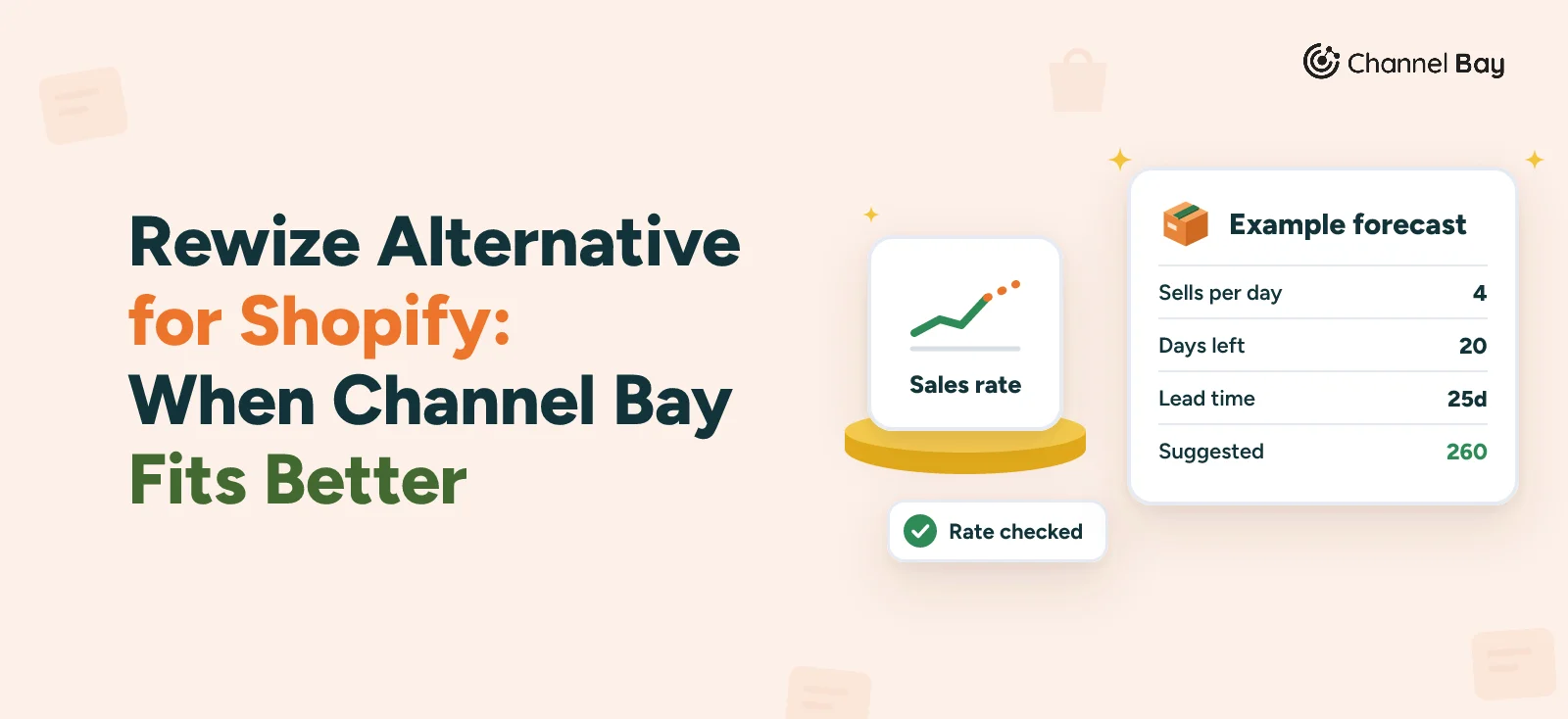
Shopify holds one cost per item for each variant and calls it static data (Shopify Help Center), so the cost you put in decides your margin. That is the question that separates the two apps. Take the order that runs through our purchase order guides, PO-2026-0142: 480 mugs arrive at a supplier price of $3.20, and freight, duty and fees bring the landed cost to $1,836 for the 480, or $3.825 a mug (the working is in our guide to Shopify cost per item and landed cost). The store already held 120 mugs that cost $3.60 each, and it then sells 200 mugs at $16.
Landara costs from landed cost. Its FAQ and help pages describe it this way:
- It builds a cost layer each time you receive stock, at landed cost, and draws the layers down oldest first as Shopify orders ship.
- Stock received on a purchase order is first written at the order price and marked provisional, then corrected when the order is finalised or the supplier invoice is costed.
- You split extra costs by value (its recommended default), quantity, weight or volume. One method applies to each calculation, you set a default in Settings and you can change it for a shipment.
- Weight needs a weight on each SKU, and Landara asks for it rather than guessing.
- Freight printed on a supplier's own invoice stays with that invoice's products, and separate freight, duty or customs bills are pooled across every line.
- Landara also offers a moving average, and says it pushes the cost per unit to Shopify.
Channel Bay works out landed cost on the purchase order as you receive it. Each delivery is its own batch with its own freight, adjustments (negative for a supplier credit), discounts and tax, spread across the lines by value, and you can override a line's landed cost to split by weight.
Cost Tracking, on Pro, values stock in FIFO or LIFO layers, and Rolling Average cost is a separate setting. Here is the catch. The layers, the rolling average and the cost Channel Bay sends to Shopify all use the figure in the Unit Cost box on the receiving screen, which starts from the price on the purchase order line. The landed cost is calculated beside it and does not feed them.
| Landara | Channel Bay, as received | Channel Bay, landed cost typed at receiving | |
|---|---|---|---|
| Cost of the 480 new mugs | $3.825 each | $3.20 each | $3.825 each |
| Cost of the 200 sold (120 at $3.60, then 80 from the new layer) | $738.00 | $688.00 | $738.00 |
| Profit on $3,200 of sales | $2,462.00 | $2,512.00 | $2,462.00 |
The first column is Landara costing the delivery at landed cost. It is one product on one purchase order, so the allocation method does not change the answer. The 80 mugs from the new layer cost $306.00 at $3.825 and $256.00 at $3.20. That $50.00 is the freight, duty and fees on those 80 mugs, and costed at the purchase order price it never reaches the margin on these sales.
You can close that gap in Channel Bay. Read the landed cost per unit on the purchase order and type it into the Unit Cost box when you receive, and the layers, the average and the cost sent to Shopify all use it. The box also becomes the line's price on the purchase order and that supplier's saved cost, so the next order starts from landed cost rather than the supplier's quoted price. It is an extra step on every delivery. If you want landed-cost layers without it, Landara does that by design.
For how the layers and the average compare on the same mugs, see our guide to FIFO, LIFO and weighted average.
How Does Each Get From a Supplier Invoice to a Cost?
Landara reads the invoice for you. Its FAQ says AI extracts the charges from a freight invoice, using Azure Document Intelligence for text recognition and then xAI's Grok to structure it, and that you approve the result. It gives 90 to 98 percent as its accuracy on standard freight invoices, which is its own figure, not one we have checked.
Landara can also create a purchase order from a supplier invoice, marked received. A deposit in a foreign currency is fixed at the rate on the day you paid it and the balance at the rate on arrival, and per-supplier pack sizes turn cartons into units.
Channel Bay does not read invoices. You enter freight and adjustments for each delivery, with the supplier's invoice number, and Channel Bay spreads them across the lines. A purchase order in the supplier's currency is converted at the rate on the day it was opened, and you can override a line's landed cost if you paid at a different rate. Multi-currency purchase order conversion is on Pro. Our guide to splitting landed cost covers the three ways to split extra costs and when to use each.
What About Purchase Orders, Receiving and Stocky?
Landara has its own purchase orders: you raise, receive and finalise them. On its paid plans you can pre-sell stock still at sea from an order, and its Growth plan adds an approval workflow. It imports purchase orders from Stocky or a spreadsheet by pasting or uploading a CSV, and its Stocky page says Stocky was five apps in one, four with easy replacements, and the fifth is knowing what stock cost.
Channel Bay's Free plan already includes purchase order management, automated purchase order emails to suppliers and partial and batched receiving, so a store can raise, send and receive without paying. Forecasting and suggested order quantities start on Basic. Channel Bay includes Stocky migration on every plan: our team runs the import from your Stocky API key or your Shopify export, and the 14-day free trial gives you time to check what came across. Our guides to purchase order software and using Stocky after the sunset cover the details.
What Happens at Month-End and in Your Books?
This is Landara's strongest card. Its help page on how it fits with your books says receiving stock debits Inventory and credits Accounts Payable, as a bill published from Landara, and that sales debit Cost of Goods Sold and credit Inventory as one consolidated journal for the period, posted when you tell it to.
Other journals cover revaluation, write-downs, shrinkage, opening balances and an accrual for goods received but not yet invoiced. Xero drafts post nothing until you approve them, and QuickBooks bills post when created. Per-SKU and per-order detail is not published in the journal, and for QuickBooks the page says supplier payments are only recorded on the order "for now". Landara's Free plan cannot post journals, because posting starts on the $49 plan.
Channel Bay does not post journals and has no Xero or QuickBooks link. Cost Tracking and Rolling Average cost do not export to accounting software either. What Channel Bay gives you is a spreadsheet download of a product's cost history, and the cost value columns in the Inventory on Hand report, which need Cost Tracking. If your bookkeeper wants a cost of goods sold journal every month, Landara does that and Channel Bay does not.
Neither app makes a costing method acceptable to a tax authority. Ask your accountant which method you file under before you choose, and see our guides to inventory valuation for Shopify stores and cost of goods sold in Shopify.
How Do Channels, Locations and Forecasting Compare?
Landara costs your Shopify orders. Its FAQ says stock that also sells on Amazon, eBay or wholesale is a poor fit, because "those sales deplete stock outside Shopify, so your COGS would be incomplete". It says Shopify owns the quantity and Landara owns the cost. Fulfilments are costed at the Shopify location they shipped from, and transfers between locations move cost internally and post nothing to your books. The pages we read do not mention bundles, and do not give a limit on stores or locations.
Channel Bay connects Shopify and Amazon, and no other channel. It holds one count per product and location and pushes it to every connected store every minute, and it works without a Shopify store. Guided stocktakes are on Free, stock transfers and cost sync start on Basic, and real-time multichannel sync, bundles and raw materials and cost tracking are on Pro. Cost Tracking values each location's stock separately. For how the Shopify and Amazon link works, see our guide to syncing Shopify and Amazon inventory.
Forecasting is the other difference. Landara does not forecast and says so. Channel Bay's forecast divides units sold over a look-back by the days in it, 90 days by default, to give sales per day, days of stock left and a suggested order quantity against each supplier's lead time. It does not model seasonality or trend. Our guide to Shopify inventory forecasting walks through how to check a rate like that.
What Does Each Cost?
Landara's pricing page prices by orders costed a month, in US dollars, billed through Shopify. Order limits are a soft cap: it says it will flag a store that goes over and never stop costing sales mid-month. Read on 20 November 2026:
| Plan | Per month | Per year, billed annually | Orders costed a month | What it adds |
|---|---|---|---|---|
| Free | $0 | $0 | Up to 250 | FIFO, COGS report, inventory valuation, CSV export, Xero, QuickBooks and Shopify connections, 10 shipments costed a month, 25 stocktake lines a count |
| COGS | $49 | $490 | Up to 500 | Journals to Xero and QuickBooks, unlimited shipments, pre-selling from a purchase order, email support |
| COGS Growth | $89 | $890 | Up to 2,000 | Purchase order approval workflow, priority support |
| COGS Scale | $179 | $1,790 | Up to 10,000 | Priority support |
Landara says annual billing saves 17 percent on the monthly price. Above 10,000 orders a month, it says to talk to it. Every paid plan has a 30-day free trial, and Landara says nothing is charged during it. Landara's Shopify listing shows the paid plans in INR (INR 4,579.91, INR 8,318.61 and INR 16,730.69 a month), with a note that INR prices are estimates at 1 INR = 0.0107 USD, which comes to the same $49, $89 and $179. The listing calls the Free plan's limit "10 landed cost calculations" where the site says shipments.
Channel Bay prices by plan, not by orders. Free is $0, Basic $30 a month and Pro $60 a month, and every plan, Free included, has unlimited orders and products, with no per-order charge (read on 23 November 2026). Cost tracking is on Pro, cost sync starts on Basic, and Basic and Pro start with a 14-day free trial.
Channel Bay's bill stays the same as orders grow, while Landara's moves up a plan. Here are two examples, using orders a month:
| Store | Landara | Channel Bay Pro | Channel Bay Basic |
|---|---|---|---|
| 400 orders a month | COGS, $49 | $60 | $30, without cost tracking |
| 1,000 orders a month | COGS Growth, $89 | $60 | $30, without cost tracking |
The two plans buy different things. If cost and journals are all you need, Landara's Free plan costs nothing up to 250 orders a month and its $49 plan adds the journals, while Channel Bay's cost tracking starts on Pro. If you also want purchase orders, stocktakes, transfers, Amazon sync and a forecast, Channel Bay's Pro plan covers them and Landara does not. Re-check both pages for the current figures before you decide.
How Do Landara and Channel Bay Compare?
| Landara | Channel Bay | |
|---|---|---|
| What it is | Cost ledger for Shopify | Stock system with cost tracking, purchase orders, transfers and stocktakes |
| FIFO at landed cost | Yes, layers are costed at landed cost | FIFO or LIFO on Pro at the unit cost entered at receiving. Enter landed cost there to match |
| Landed cost allocation | By value, quantity, weight or volume | By value, with a per-line override |
| Cost sent to Shopify | Says it pushes cost per unit | Cost sync from Basic, off until you turn it on |
| Supplier invoice reading | AI reads it, you approve | You enter freight and adjustments |
| Purchase orders | Raise, receive, finalise, pre-sell, approval on Growth | Management, emails and receiving on Free, suggestions from Basic |
| Accounting journals | Xero and QuickBooks Online, on paid plans | None. Cost history spreadsheet export |
| Stocktakes | Barcode scanning, value checked against your books | Guided stocktakes on Free |
| Forecasting | No | Sales rate from Basic |
| Channels | Shopify. Amazon sales leave COGS incomplete | Shopify and Amazon |
| Pricing basis | Orders costed a month | Plan, unlimited orders |
| Free plan | Yes, up to 250 orders a month | Yes, unlimited orders, one channel |
| Trial | 30 days on paid plans | 14 days on paid plans |
| Rating | 5.0 from 7 reviews (Shopify listing, 20 November) | 5.0 from 7 reviews (Shopify listing, 20 November) |
The two ratings come from separate Shopify listings that show the same count on the same day.
Which One Fits You?
Stay with Landara, or choose it, if:
- You sell on Shopify only, and your problem is the real cost behind your margin and stock value.
- Your bookkeeper wants a cost of goods sold journal in Xero or QuickBooks Online each month.
- You want every layer costed at landed cost without an extra step at receiving, and you want to choose how freight and duty are split.
- You already forecast somewhere else, or do not need to.
Choose Channel Bay if:
- You also sell on Amazon and want one stock count across both.
- You want purchase orders, stocktakes, transfers, a forecast and cost tracking in one system.
- A cost per unit you enter at receiving, with the landed cost beside it, is enough, and you do not need journals.
- You want a flat price that does not move with orders, with purchase orders and stocktakes on a free plan.
Either way, test the number. Take one delivery you have already costed by hand, with freight and duty on it, and check what the app says that delivery cost and what it charged to the sales that followed. Landara is a young app, so read its help pages on month-end journals and provisional costs before you rely on it.
About Channel Bay
Channel Bay is our app. Channel Bay holds one count per product and location, pushes it to every connected Shopify store and Amazon every minute, and connects Shopify and Amazon only. Its cost tracking values stock in FIFO or LIFO layers, and it does not post accounting journals. For stock systems more broadly, see the best inventory management software for Shopify.
Frequently Asked Questions
How much does Landara cost?
Is Landara free?
Does Landara work with Amazon?
Does Landara forecast demand?
Can I use Landara and Channel Bay together?

Guides from the team that builds and supports Channel Bay, the Shopify inventory app for purchase orders, stocktakes, stock transfers and multichannel stock sync. About Channel Bay